See
Parents, students, teachers and neighbours identify a concern.

Building a safer community for our children together
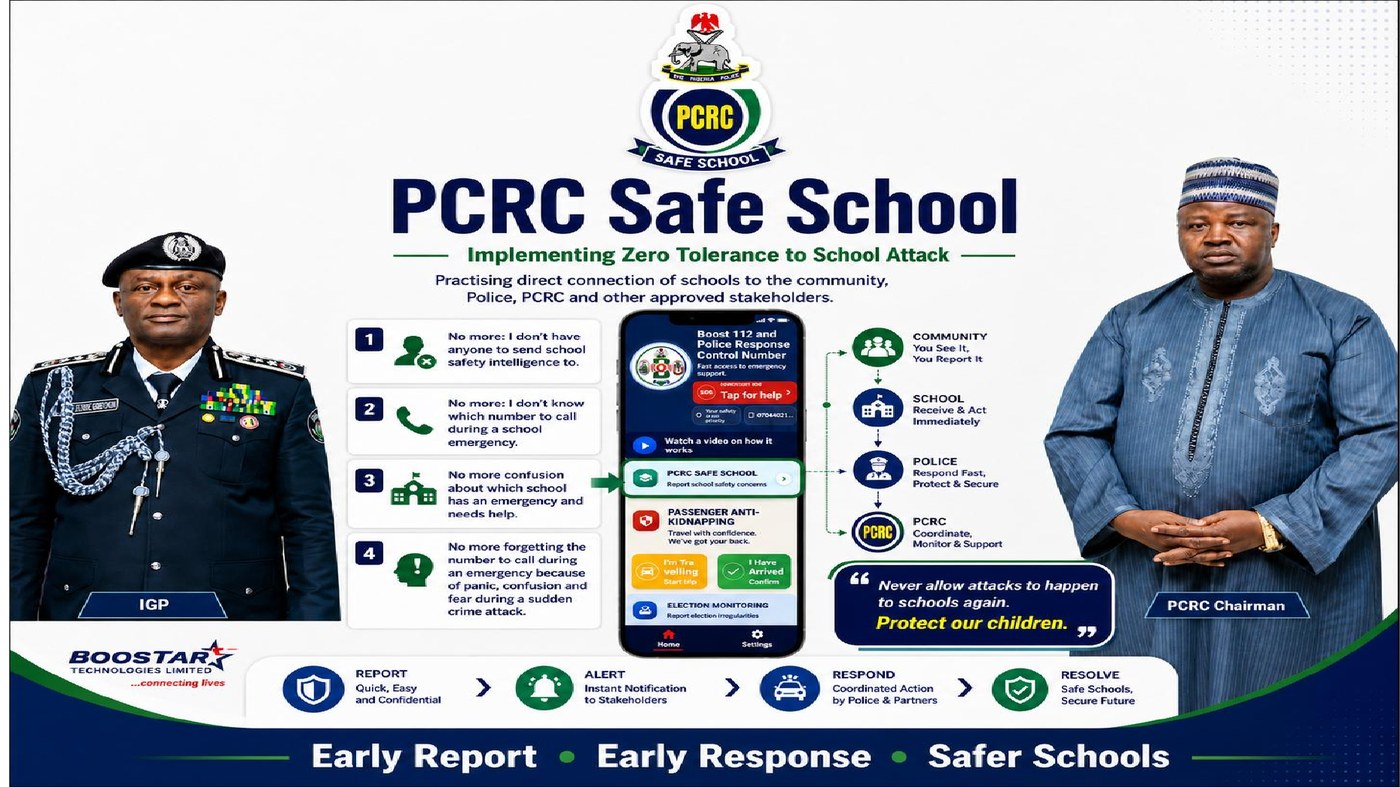
National School Safety CommandPCRC Safe School connects the community, school management, trained volunteers, PCRC and the Nigeria Police Force so warning signs are reported early and emergencies receive faster, coordinated attention.


Building a safer community for our children together through Police–community partnership, preventive intelligence, volunteer service and approved safety technology.
 8-page presentation
See how PCRC Safe School uses BOOSTAR and BOOSTAR-M to support early reporting, direct emergency connection, school registration, community intelligence and coordinated response.
A clear route from community observation to coordinated action.
Parents, students, teachers and neighbours identify a concern.
BOOSTAR carries school safety reports and emergency access.
School security, PCRC and Police receive the right information.
Threats are assessed, escalated and followed through.
In response to the Inspector-General of Police’s zero tolerance for attacks on schools and the abduction or kidnapping of pupils and students, the Police Community Relations Committee developed a grassroots-based school early-warning approach. The central aim is clear: do not allow an attack on a school to happen.
Community members may observe suspicious movement, student loitering, cultism, damaged fencing, alcohol or drug activity and other warning signs, but these concerns may not reach the right authority early enough.
The programme addresses this gap through community reporting, a credible school security database, direct emergency access and coordinated local response. Late distress alerts naturally produce late or belated response.
People see threats around schools but may not know the correct channel for reporting.
Panic and fear can delay access to emergency support and Police control rooms.
Early warning helps report gangs, drugs, intrusion and strange movement near schools.
Schools need a dependable connection to authorised security responders.
School security personnel require a direct way to raise urgent alerts.
Accurate school identity, location and risk information support better planning.
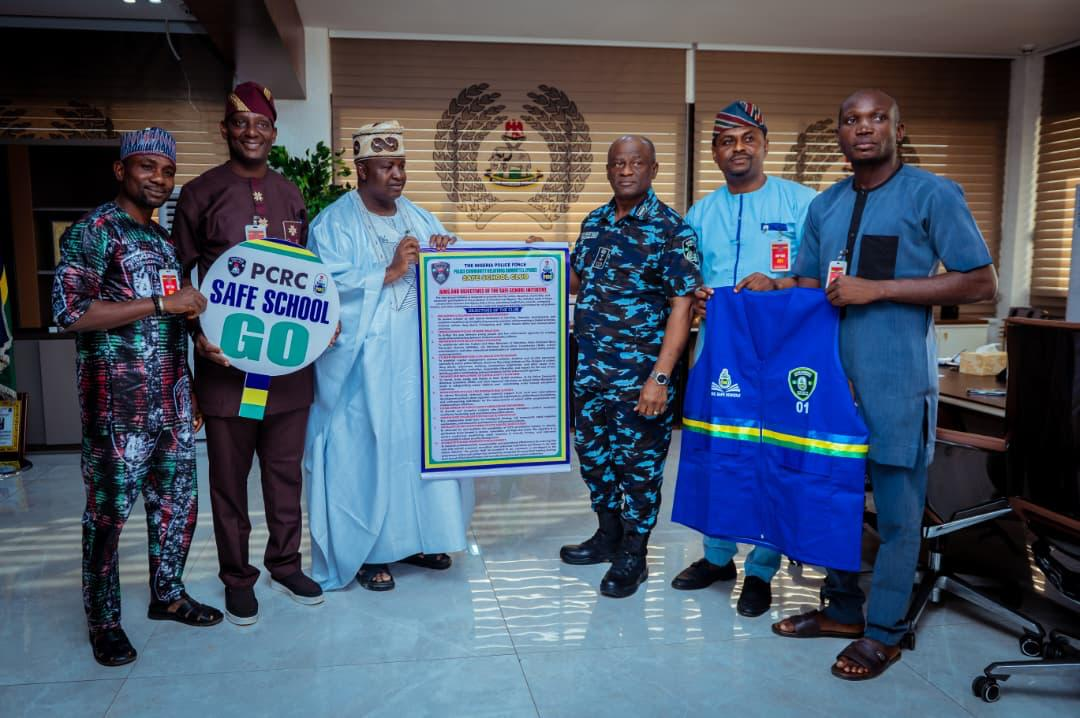
The model combines visible volunteer service, community intelligence, school data and direct response channels.
Structured service at divisional level includes road-crossing assistance, committee work, community safety enlightenment, intelligence gathering and support for school protection activities.
BOOSTAR helps the public access 112 and Police response numbers, report school safety concerns and share useful location information through approved channels.
BOOSTAR-M supports school registration, personalised school SOS, live alerts, operational monitoring and coordination by authorised users.
Last-mile CCTV and community alert speakers can extend early warning to vulnerable and remote school environments.

The National Chairman established committees and mobilised capable partners to advance volunteer service, digital reporting, school-to-DPO communication, school safety data, last-mile CCTV and public alert technology.
Explore the implementation structure →Early information supports early action, better coordination and safer schools.